

If you’ve spent time in aromatherapy circles online, you’ve likely come across charts claiming that essential oil frequencies exist and can influence well-being. Are these ideas grounded in science — or simply modern marketing myths? This article explores essential oil frequencies.
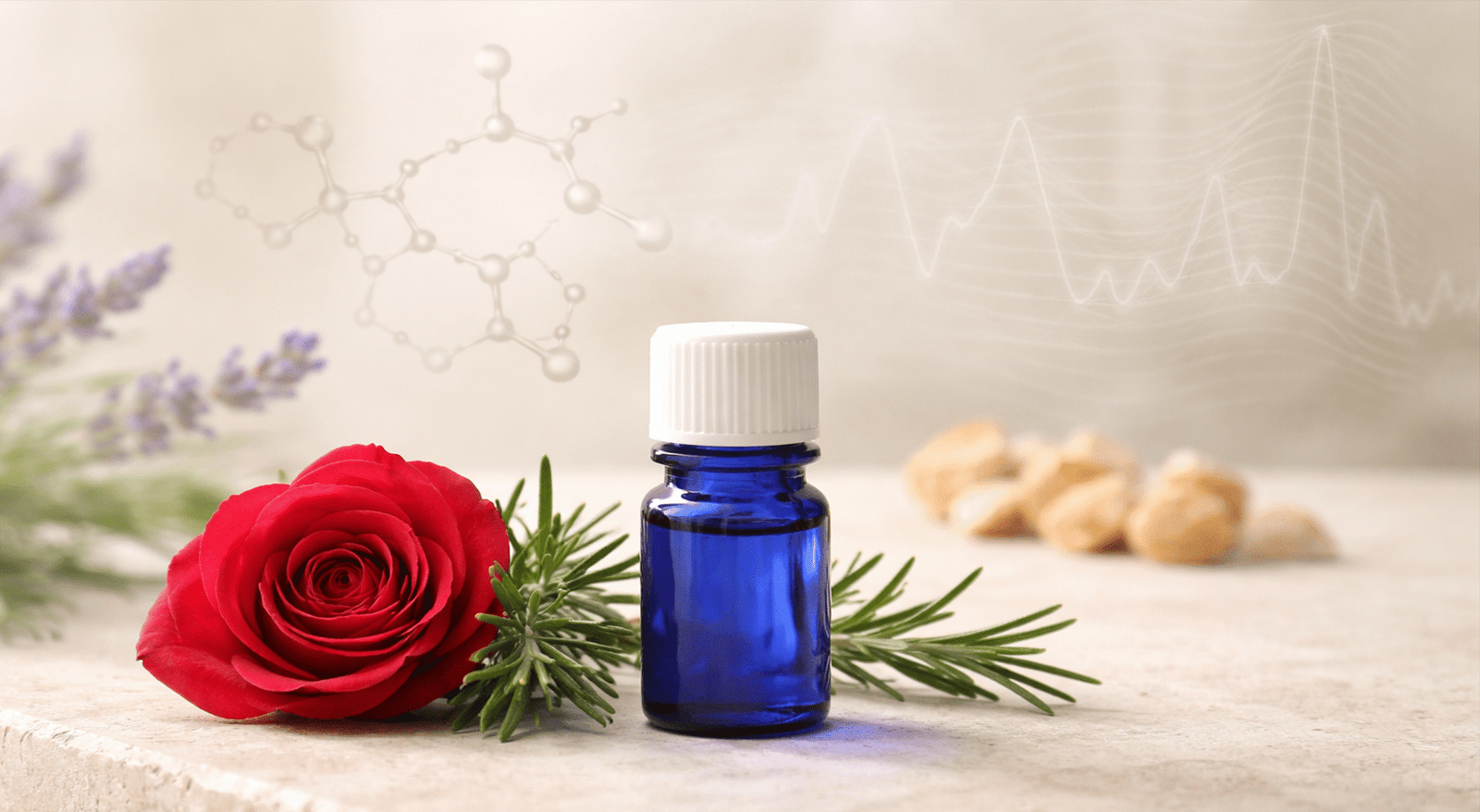
Essential oil frequencies are widely discussed online through “frequency charts” that assign MHz numbers to oils and even to the human body. These claims suggest that oils can “raise your vibration” to support well-being.
Before accepting these ideas, it is important to clarify what the word “frequency” actually means in science — and to understand what essential oils can realistically be measured for in a laboratory.
In the following sections, we’ll examine where these charts originated, what FTIR testing truly measures, and how essential oils support the body through chemistry and the nervous system.
Where Did Essential Oil Frequency Charts Originate?
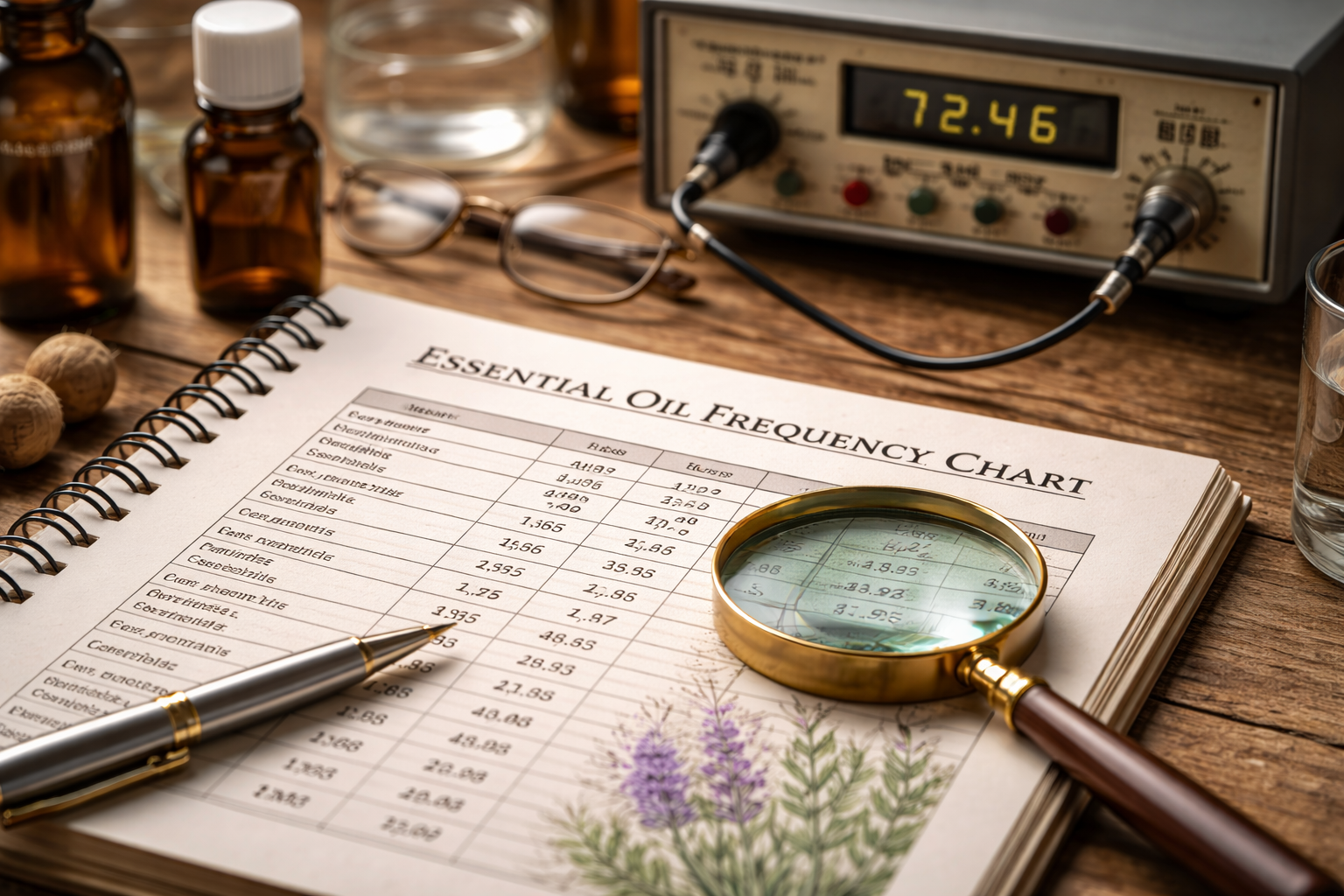
Most “essential oil frequency charts” circulating online trace back to informal instrument readings from the 1990s, often using handheld frequency counters with probes placed in liquids.
These numbers were never established through standardized, peer-reviewed research, nor reproduced in independent laboratory testing. Over time, the claims were widely repeated online and reshaped into marketing language — despite the absence of a defined physical mechanism or validated measurement protocol.
What Does “Frequency” Mean in Science?
In science, frequency refers to the rate at which a repeating event occurs, usually measured in hertz (cycles per second). In physics and chemistry, frequency is commonly used to describe electromagnetic waves, sound waves, and molecular vibrations. However, these measurements require precise laboratory instruments and clearly defined testing conditions.
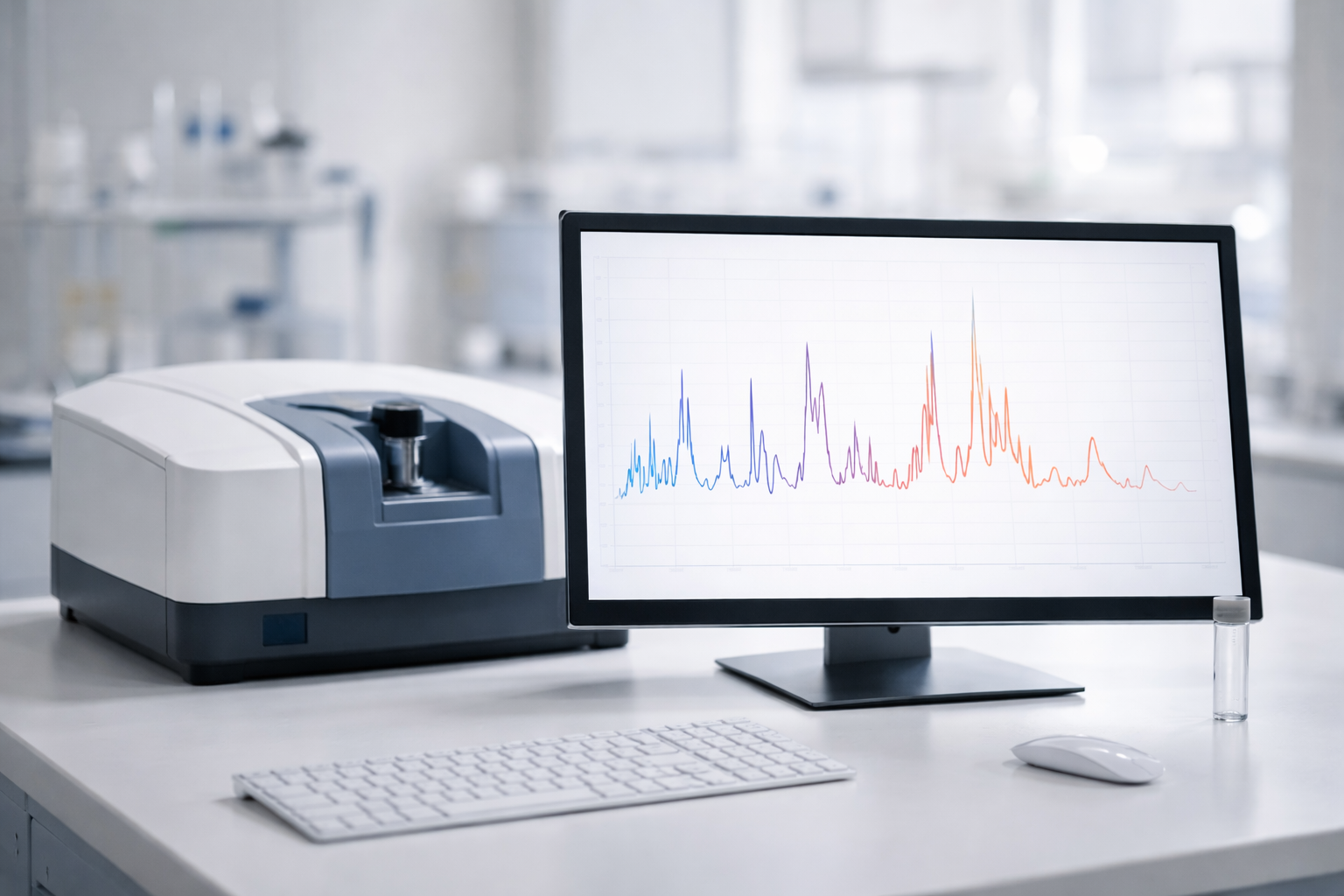
When it comes to an essential oil as a substance, the only scientifically measurable “frequencies” are molecular vibrational frequencies detected through spectroscopy.
In a Fourier-Transform Infrared (FTIR) spectroscopy analysis, infrared light passes through the oil sample and specific molecular bonds absorb distinct wavelengths. The resulting absorption spectrum forms a digital molecular fingerprint that reveals the oil’s chemical composition and purity. These measurements reflect light–matter interactions, not emitted healing energy fields.
Why “Healing Frequency” Claims are Not Supported by Science?
Although molecular vibrational frequencies are real and measurable in laboratory settings, there is no evidence that essential oils emit therapeutic energy fields or transfer vibrational healing frequencies to the human body. The MHz values promoted in online charts do not correspond to biologically measurable signals, nor have they been validated in controlled clinical research.
In aromatherapy, essential oils interact with the body through well-studied biochemical pathways, including olfactory signaling, nervous system modulation, and topical absorption, not through broadcasted electromagnetic frequencies.

Classical clinical aromatherapy texts, such as those by Gabriel Mojay and Salvatore Battaglia, describe essential oils as acting through biochemical, neurological, and psychophysical pathways.
Their use of terms like “subtle” or “energetic” refers to perceptual and traditional medical frameworks, not to measurable electromagnetic healing frequencies. This distinction is important, as modern marketing interpretations have often blurred the line between metaphorical language and physical scientific measurement.
Conclusion: Science Over Symbolism.
Essential oil “frequency charts” have become popular in online wellness culture, but their MHz values are not grounded in validated laboratory research. In contrast, spectroscopy demonstrates that essential oils have measurable molecular vibrational frequencies — a tool for identifying chemical composition, not a mechanism for broadcasting healing energy.

Clinical aromatherapy, as taught by authors such as Gabriel Mojay and Salvatore Battaglia, explains oil effects through biochemical, neurological, and psychophysical interactions with the body. These pathways are supported by physiology and chemistry, offering a credible foundation for therapeutic practice.
When we separate scientific measurement from marketing metaphor, essential oils can be appreciated for their real properties — complex natural substances that support well-being through known biological mechanisms.
REFERENCE
Battaglia, S. (2018). The Complete Guide to Aromatherapy. The Perfect Potion Pty Ltd, 3rd ed.
Baser, K. H. C., & Buchbauer, G. (Eds.). (2010). Handbook of Essential Oils: Science, Technology, and Applications. CRC Press.
British Pharmacopoeia Commission. (2023). British Pharmacopoeia: Herbal Drugs and Essential Oils Monographs. The Stationery Office.
Buckle, J. (2015). Clinical Aromatherapy: Essential Oils in Practice. Elsevier, 3rd ed.
Lawless, J. (1992). The Encyclopedia of Essential Oils. Element Books.
Mojay, G. (1996). Aromatherapy for Healing the Spirit: Restoring Emotional and Mental Balance Through Essential Oils. Henry Holt & Co.
Price, S., & Price, L. (2012). Aromatherapy for Health Professionals. Elsevier, 4th ed.
Smith, B. C. (2011). Infrared Spectral Interpretation: A Systematic Approach. CRC Press.
Tisserand, R., & Young, R. (2014). Essential Oil Safety: A Guide for Health Care Professionals. Churchill Livingstone.
Worwood, V. A. (2016). The Complete Book of Essential Oils and Aromatherapy. New World Library, 25th Anniversary ed.
World Health Organization. (2007). WHO Guidelines on Good Agricultural and Collection Practices (GACP) for Medicinal Plants. WHO Press.

Excellent information, as always. Your essential products have been of great value to our family. Thank you for the insightful updates..